


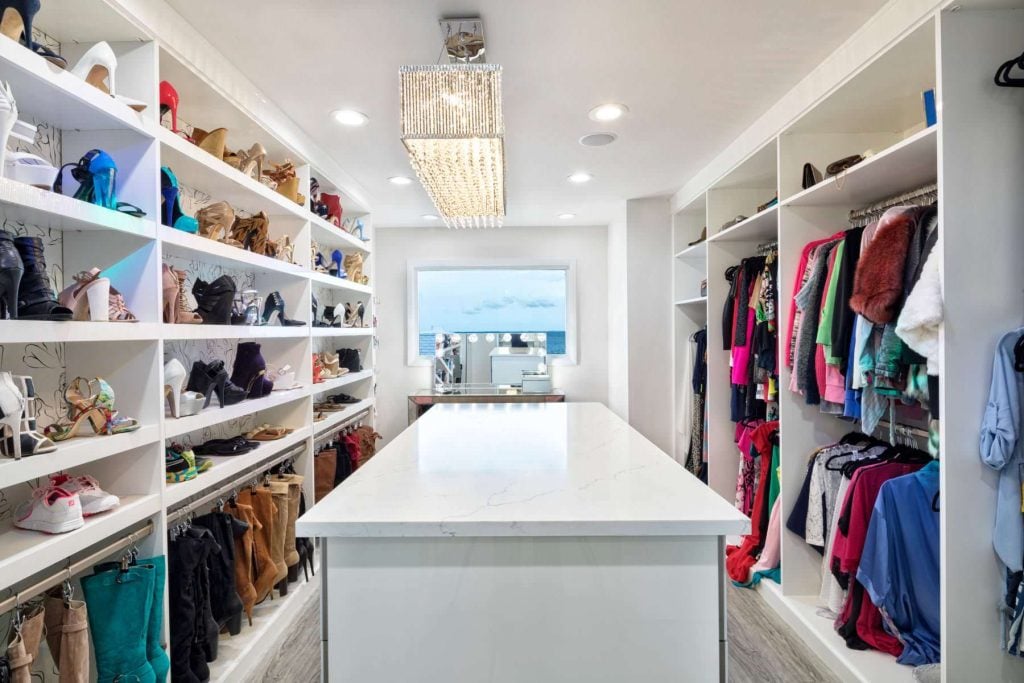
I’ve seen countless bedrooms and walk-in closets over the years, and one of the most common upgrades to make is from builder-grade wire shelving. It’s usually installed at shoulder height—a single shelf and rod combo that never truly maximizes the space. In many cases, I can easily double the hanging area by simply having a shelf and rod higher up, and then adding a lower bar. However, most people also need shelving for shoes, drawers for accessories, or specialized racks for ties and belts. Sometimes, a simple addition of “storage components” can dramatically change how you use your closet—no need to downplay how impactful that transformation can be.
Below, I’ll walk you through my personal approach to designing custom walk-in closets, share some walk-in closet organizer ideas, and even discuss how to turn a bedroom into a closet on a budget. By the time you’re done reading, you’ll have a clear strategy for your own space—one that aligns with your style, your daily routine, and your budget.
1. Start with the Current Layout
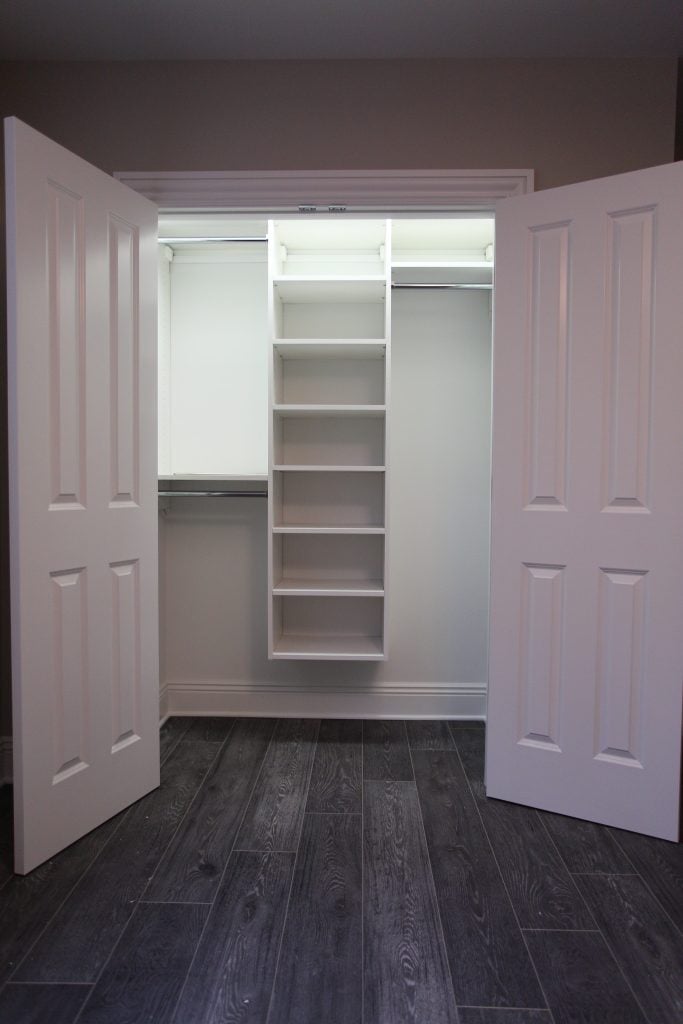
Take a good look at your bedroom or walk-in closet. Often, a single shelf-and-rod combo can limit your hanging space significantly. By raising that top shelf to about seven feet and adding another at three and a half feet, you can increase your storage without even knocking down a wall.
- Tip: If you can’t fit two full rods, consider mixing half-hang sections (for shirts and skirts) with a longer hang section for items like coats and dresses.
2. Decide if a Layout Change is Necessary
For some, a simple addition of shelving and drawers is enough. For others, especially if you have a cramped area or an awkward layout (like a sloped ceiling), it might be worth moving walls or adding recessed storage to make the most of every inch.
- Complete remodel or small walk-in closet organization ideas? It all depends on your budget, your timeline, and how big of a difference you want.
3. Embrace Storage Components and Accessories
Once you’ve decided on the basic design, it’s time to consider the fun stuff—accessories. Drawer inserts for jewelry, belt racks, tie racks, pull-out hampers, and shoe cubbies can truly make life easier.
- Valet rods are a personal favorite of mine. They’re perfect for laying out outfits or hanging newly ironed clothes.
4. The His-and-Hers (or Theirs-and-Theirs) Approach
Many clients want a his and hers closet where both parties have distinct sections. I’ve often split a 6×10 space into two sides, with a shared wall for shoes or something else you both need. Modern homes come in all shapes and sizes, so tailor it to your situation—like a left-and-right division or a back-wall focus for shared items.
5. On a Budget? Convert a Spare Room
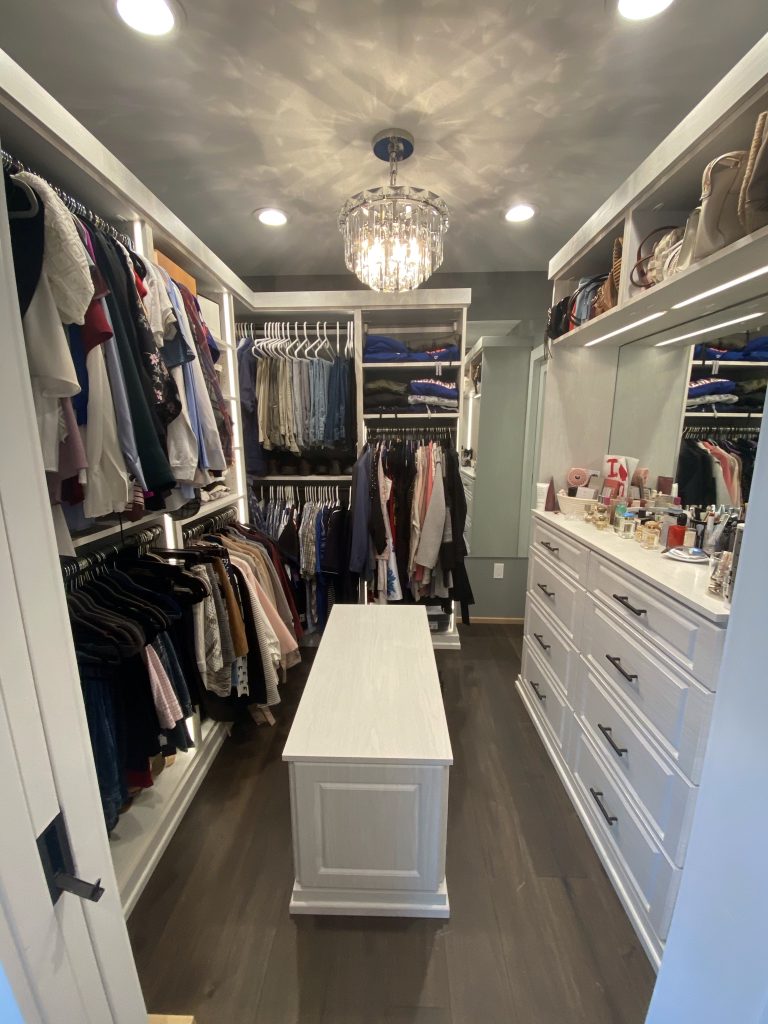
Turning a spare bedroom into a walk-in closet is an exciting project but can get pricey fast because of the sheer scale. If you’re exploring how to turn a bedroom into a closet on a budget, focus on the must-haves: strategic hanging rods, shelves for folded clothes, shoe storage, and a few drawers for smaller items. You can always add more later as funds allow.
6. Planning for Future Expansion
Whenever I work on a big renovation, I like to ask if you plan to move or expand later. A modular approach might save you money if your wardrobe or household grows. You can add extra shelving or rods in the future or swap out shelves for drawers if the need arises.
- If you think you might sell your home eventually, a classic style like Shaker doors appeals to most buyers and boosts resale value.
7. Practical Tips for Daily Life
- Seasonal Storage: I’m a huge advocate of rotating seasonal items—thick coats don’t need to clutter your daily closet space in the summer.
- Drawer Inserts: Keep smaller accessories like jewelry, ties, or scarves neatly separated and ready to go.
- Floor vs. Wall-Mounted Units: Full floor-based systems offer a more polished look and extra stability, but wall-hung systems are easier on the budget.
- Seating & Mirrors: If space allows, a bench under a window can be a game-changer when getting ready. A mirror is another must-have for that final outfit check.
8. My Final Thoughts
I’ve installed bedroom cabinets in nearly every shape and size of closet, from cozy nooks to entire bedrooms-turned-closets. The key is making sure form follows function—your closet should adapt to your wardrobe, not the other way around. When done correctly, a well-designed storage solution can genuinely improve your day-to-day life, whether that means you never trip over boots again or you finally have a dedicated place for every pair of shoes.
I hope these insights help you plan out the perfect closet solution for your space. Remember, adding new storage components is never “just” an upgrade—it can completely change the way you live. If you’re considering something that goes beyond simple shelving, reach out—I’m always happy to talk design, budget, and everything in between.