

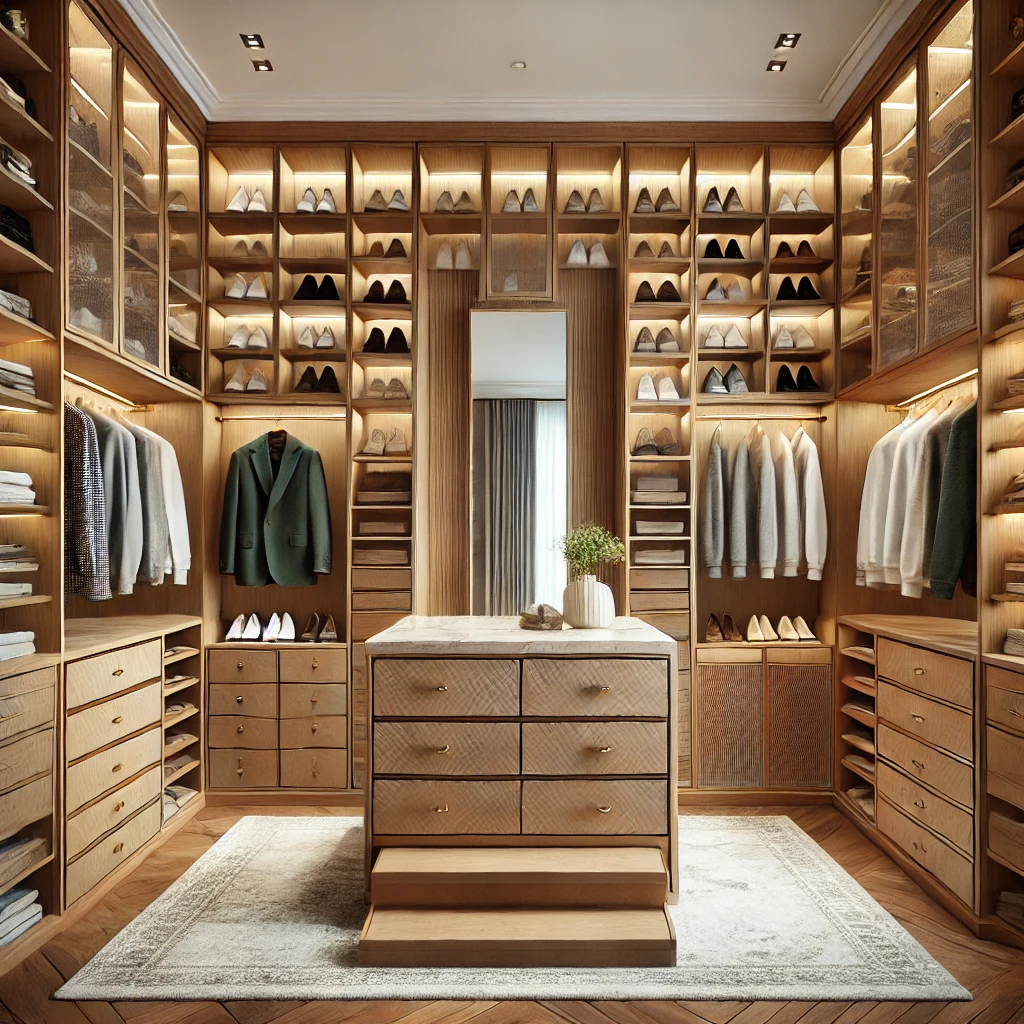
In today’s fast-paced world, homeowners increasingly turn to online tools for planning and designing their ideal wardrobe spaces. While virtual planning offers convenience, navigating between DIY approaches and professional expertise can make all the difference between a frustrating experience and a stunning, functional closet. As a custom closet specialist serving the Lower Hudson Valley region, I’ve helped countless clients transform their storage spaces—both through virtual consultations and in-person designs. Here’s what you need to know about online wardrobe planning & design.
The Online Planning Process: A DIY Guide with Expert Tips
1. Mastering the Measurement Process
The foundation of any successful online wardrobe planning & design project is accurate measurements. Here’s how to get it right:
- Use a metal tape measure (cloth ones can stretch and provide inaccurate readings)
- Measure the height from floor to ceiling in multiple spots (floors aren’t always level)
- Note any obstructions like vents, switches, outlets, or baseboards
- Account for door swing clearance (minimum 18″ recommended)
- Measure width at three heights: floor level, middle, and ceiling (walls aren’t always straight)
DIY Measurement Checklist:
- Width of available wall space (in inches)
- Height from floor to ceiling (in inches)
- Depth available (typically 24″ for closets, but confirm your space)
- Location of any windows, doors, light switches, or vents
- Positions of wall studs (for secure mounting)
Pro Tip: While following these steps will improve your DIY measurements, having a professional closet designer verify your dimensions can eliminate costly errors.
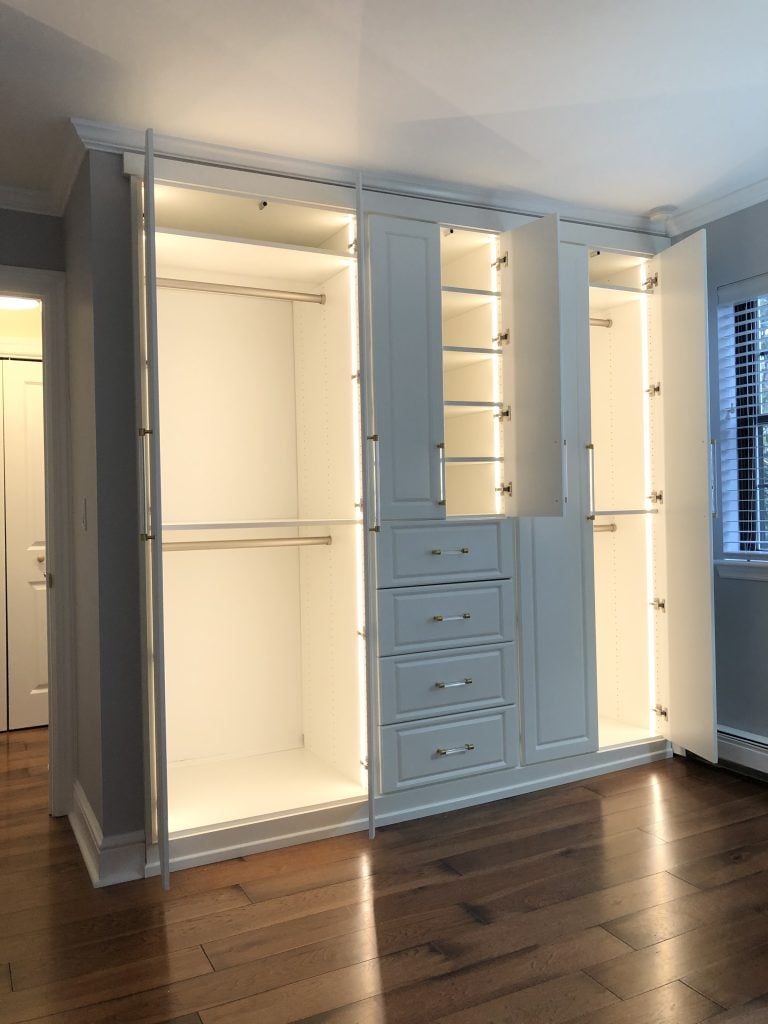
2. Creating a Functional Inventory System
Before diving into any online wardrobe planning tool, take time to inventory what you actually store. This step is crucial for DIY success:
Step 1: Clothing Audit Count and categorize your items:
- Long-hanging items (dresses, coats): _____ items × 2″ per item = _____ inches needed
- Short-hanging items (shirts, folded pants): _____ items × 1″ per item = _____ inches needed
- Folded items: Estimate shelf space needed for sweaters, t-shirts, etc.
- Shoes: Count pairs and consider display vs. storage preferences
- Accessories: Belts, ties, scarves, jewelry, etc.
Step 2: Determine Rod Heights
- Long hang: 65-70″ from floor
- Double-hang (two rods): Upper rod at 80-84″, lower rod at 40-42″
- Medium hang (for shirts): 54″ from floor
- Children’s items: Lower all measurements by 10-12″
Step 3: Plan Shelf Spacing
- Allow 10-12″ between shelves for folded clothes
- Allow 6-8″ for purses and accessories
- Allow 14″ minimum for shoes
This inventory-based approach ensures you design for what you actually own rather than an idealized closet. Many online wardrobe planning tools let you input these specific measurements, but translating them into an efficient design can be challenging without experience.
3. Selecting the Right Online Design Tools
Several free and paid online wardrobe planning & design tools can help you visualize your project. When evaluating tools, look for these essential features:
- Drag-and-drop functionality
- Accurate measurement input fields
- Material and color selection options
- The ability to save and modify designs
- Export or sharing capabilities
2D vs. 3D Visualization: While 2D layouts help with basic planning, 3D models are vastly superior for understanding how your design will function in real life. They help identify potential issues with drawer placement, door clearance, and overall ergonomics. Learning to use 3D software effectively requires time and practice—typically 5-10 hours for basic proficiency.
Pro Advantage: With Matthew Closet Guy’s professional design service, you’ll receive comprehensive 2D & 3D renderings that show exactly how your new closet will look and function—without the learning curve of complex design software. These professional renderings often reveal optimization opportunities that DIY planners miss.
4. Understanding Materials and Hardware Options
A key challenge in online wardrobe planning & design is selecting appropriate materials without seeing them in person. Here’s a quick guide to help you navigate these choices:
Board Material Types:
- Particleboard: Budget-friendly but less durable; typically 5/8″ thick
- MDF (Medium-Density Fiberboard): Stronger than particleboard with a smoother finish; usually 3/4″ thick
- Plywood: Most durable and resistant to sagging; ideal for wider shelves
Finish Options:
- Melamine: Plastic coating over board material; most affordable
- Laminate: More durable than melamine with better moisture resistance
- Veneer: Thin layer of real wood over engineered board
- Solid Wood: Highest quality but most expensive
Hardware Considerations:
- Drawer Slides: Ball-bearing slides offer smoother operation and higher weight capacity than basic rollers
- Hinges: Look for soft-close options to prevent slamming
- Handles/Knobs: Match with your room’s existing hardware for cohesion
DIY Reality Check: Standard online retailers typically offer limited material options, and quality can vary dramatically. Without seeing and feeling samples, it’s difficult to assess durability and appearance. Many DIYers report disappointment when materials appear different in person than they did online.
Tip for Serious DIYers: Request material samples before finalizing your design to avoid surprises. Allow 1-2 weeks for shipping and evaluation. When selecting finishes for your custom closet, consider materials that complement regional design trends popular in Hudson Valley homes.
For visual inspiration before finalizing your design, browse through local design inspiration galleries featuring closet solutions created specifically for homes in our area.
Professional Advantage: Working with Matthew Closet Guy gives you access to premium materials not available through retail channels, including specialized finishes and hardware options. During a consultation, you can see and touch actual samples in your space to ensure they complement your home’s aesthetic.
DIY Installation Tips and When to Call a Professional
If you’re proceeding with a DIY installation after completing your online wardrobe planning & design, here are essential tools and techniques to ensure success:
Essential Tools for DIY Installation:
- Stud finder
- Level (4-foot recommended)
- Power drill with various bits
- Tape measure
- Screwdriver set
- Adjustable wrench
- Step ladder
- Helper (closet installation is rarely a one-person job)
Installation Best Practices:
- Remove everything from the existing closet and clear at least 6 feet of working space
- Find and mark wall studs – secure attachment is crucial for safety
- Install the horizontal hanging rails first – they provide the foundation
- Work from top to bottom – install upper shelves before lower components
- Check level frequently – small errors compound quickly
- Pre-drill all screw holes to prevent splitting
- Follow weight guidelines for shelves and hanging sections
Common DIY Pitfalls:
- Failing to account for wall irregularities
- Insufficient support for heavy sections
- Improper spacing that limits functionality
- Missing critical hardware components
- Damage to walls or materials during installation
When DIY Makes Sense:
- Simple, rectangular closets with standard dimensions
- Basic organizational needs without specialized features
- Comfortable with power tools and reading technical instructions
- Budget is the primary consideration over convenience and time
- No unusual structural considerations or challenges
When to Call Matthew Closet Guy:
- Unusual spaces with angles, corners, or height variations
- Need for specialized storage solutions
- Desire for premium materials and finishes
- Limited time or DIY experience
- Want to maximize every inch of available space
- Looking for professional-grade quality that increases home value
- Here are some tips on how to find the best local and affordable closet services on the Lower Hudson Valley.
The Professional Advantage: What You Get with Matthew Closet Guy
While this guide provides a solid foundation for DIY online wardrobe planning & design, many homeowners discover that professional assistance delivers superior results with less effort. Here’s what sets our service apart:
- Time Efficiency: The average DIY closet project takes 15-25 hours spread across planning, shopping, and installation. With Matthew Closet Guy, you’ll spend approximately 2 hours in consultation and design review, saving you valuable time.
- Budget Optimization: Our industry experience helps identify where to invest for maximum impact and where to save without compromising quality. Many clients are surprised to discover our custom solutions are competitively priced compared to high-end retail options—with significantly better quality.
- Expert Installation: Professional installation typically takes 4-6 hours versus 8-12 hours for DIY approaches. Our team brings specialized tools and techniques that ensure perfect alignment and secure attachment.
- Personalized Service: With over 13 years of experience across five different closet companies, Matthew brings unparalleled expertise to every project. You’ll work directly with him from consultation through installation.
- Long-Term Value: Professional closet systems typically last 15-20 years compared to 5-7 years for DIY solutions, providing better return on investment and potentially increasing home resale value by 2-3%.
The Best of Both Worlds: Many clients combine DIY planning with professional execution. Start your online wardrobe planning & design process, then bring your ideas to us for refinement and professional installation.